

Support at Home Classification 5
Introduction
The eight new Support at Home funding classifications are designed to create a closer fit between program participants and the support they receive.
Here, we focus on Support at Home Classification 5. It’s for care recipients who require intensive daily support to keep living safely and independently at home, and is especially suited to those with complex and ongoing health needs, such as diabetes.
Support at Home Classification 5 Overview
Compared with Support at Home Classification 4, Classification 5 encompasses a higher and more coordinated level of daily support. This includes personal care, domestic help, transport, and clinical care (for example, regular nurse check-ins, continence care, help with medication management and mobility assistance).
Classification 5 can also include home safety assessments and funding for assistive equipment to make daily living safer and easier, such as a shower chair and bathroom grab rails.
Who is SAH Classification 5 for?
You may wonder whether Support at Home Classification 5 is the right match for your needs. While a My Aged Care assessment will determine this, answering these questions can help you understand if this level is suitable:
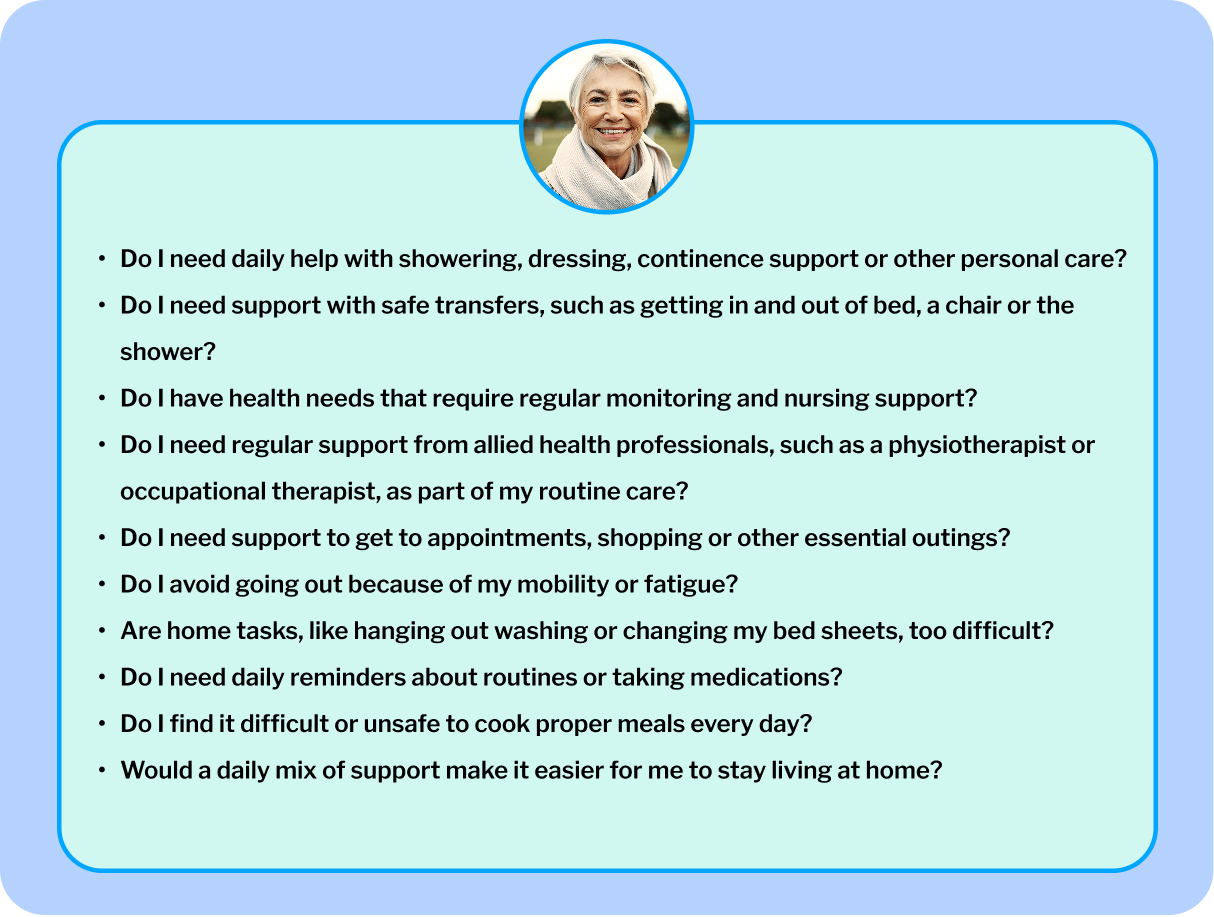
If you answered “Yes” to several of these questions, then Classification 5 may be the right level of support for you.
If you’re not currently receiving funding at this level and think you might need it, you can speak to your care provider or request a reassessment and care plan review via My Aged Care.
What is the Classification 5 funding budget?
For Support at Home Classification 5, care recipients receive $39,697. This annual budget is divided into $9,924 quarterly payments.
Key funding points:
- Your total care budget consists of government funding, your contributions and any eligible supplements.
- You may be asked to pay a share of costs based on your income and assets. There’s a $135,318 lifetime cap on care costs (current as of 1 November 2025), so you’ll never pay more than this over time.
- Your care provider can deduct up to 10% of your quarterly budget for care management.
- When wait times for ongoing funding in the Support at Home Priority System are longer than expected, you may receive 60% of your approved funding upfront to access essential services. The rest of your budget will be assigned as soon as funding is available.
- Budgets are indexed each year on 1 July.
How many hours of care does Support at Home Classification 5 provide?
If you’re approved for Classification 5 funding, you’ll receive an annual budget of $39,697. The number of care hours you receive depends on how you use your budget. You need to factor in:
- The type of services you choose (for example, clinical support services cost more than personal care or transport)
- Your service provider’s prices (hourly costs)
- Whether you’re required to contribute based on your income and assets
- Provider care management fees
Will I have to pay an out-of-pocket cost with Classification 5?
You may need to pay a co-contribution with Support at Home Classification 5 funding. The amount depends on two things:
1. Your Income and Assets
- Full Age Pensioner: Minimum contribution
- Part Pensioner / Commonwealth Seniors Health Card holder: Moderate contribution
- Self-Funded Retiree: Higher contribution
As a Support at Home program participant, you will be asked to submit an income and means assessment (typically through Services Australia) to determine how much you contribute toward your care. While this assessment isn’t technically required to access services, if you choose not to complete one, you may be asked to pay the highest contribution rate.
2. The Service Category
The Australian government groups aged care services into three categories:
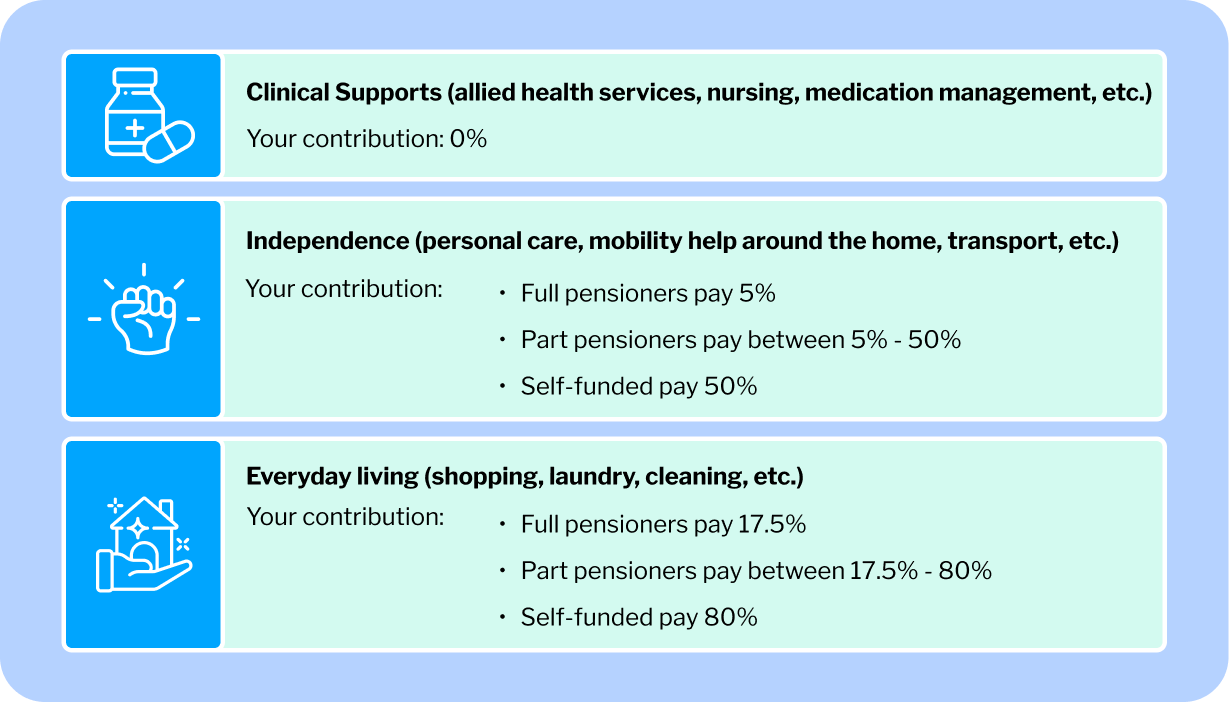
When you put these together, you get an idea of how much you’ll need to pay out-of-pocket. My Aged Care’s Fee Estimator tool is useful to help you plan your Support at Home budget.
What types of services are available with Classification 5?
A Classification 5 budget allows you to organise frequent, coordinated support at home. The care services you select will depend on your assessed needs and support plan, but may include:

Daily help with:
- domestic tasks, like cleaning, laundry or meal preparation
- shopping, errands and other regular activities
- transport
- support to maintain routines
- social support for wellbeing, such as community outings

Daily help with:
- dressing
- personal hygiene (showering, etc.)
- continence support
- safe transfers (like getting in and out of bed, a chair or the shower)
- mobility support around your home
- medication reminders

Daily care such as:
- continence management
- wound care and dressing changes
- medication support and review
- clinical care monitoring (blood pressure, glucose levels, pain, etc.)
- allied health support, such as speech pathology, physio or occupational therapy
- post-hospital recovery care

Regular safety-focused maintenance, such as:
- lawn mowing
- weeding garden beds
- pruning small shrubs
- sweeping paths and driveways
- basic watering
- trimming low branches for safety
Extra help is always at hand
If you’re still unsure about what Support at Home Classification 5 covers, or would like to find out more about in-home care options, The CareSide team is here to help. You can reach us on 1300 85 40 80 or fill out a quick enquiry form. One of our care consultants will get back to you soon.

General Support at Home FAQs
How do I get Support at Home Classification 5?
The process of getting Classification 5 funding begins with registering online with My Aged Care or by calling 1800 200 422. If you meet the eligibility requirements, an assessor will visit your home to talk about the level of support you may need to keep living independently.
If you’re approved for ongoing Support at Home funding, you’ll then be placed in the Priority System until funding becomes available. After that, you can select a provider to help organise your care plan and services.
How is my Support at Home level decided?
Your Support at Home classification is based on an aged care assessment. An assessor will visit your home and ask questions about your health, mobility and daily routines. They will then use this information to decide which classification best reflects your care needs to help you keep living safely and independently at home.
Who manages my Support at Home budget?
Once you have your classification level, your care provider will work with you to plan home services from a government-approved list that fits your assessed needs. You’ll receive monthly statements which show you how your budget is being spent and how much funding remains.
Can unused Support at Home funding carry over?
Yes. If you do not use your full quarterly budget, you can carry over up to $1,000 or 10% of the quarterly amount (whichever is higher) to the next quarter.
What if my needs change?
If you feel you need more or less support, you can ask for a review of your care plan through your care provider or via My Aged Care.
How do I transfer from a Home Care Package to Support at Home Classification 5?
If you previously received a Home Care Package, your funding has moved to an equivalent Support at Home classification. Your budget matches your previous package level, and unspent funds move with you into Support at Home.
What happens if Classification 5 funding isn’t enough?
If your support needs exceed your budget, you can request a reassessment through My Aged Care. This will determine whether you are approved for a higher Support at Home classification.
Depending on your needs, you may also be assessed for separate short-term care funding. This is via the short-term care pathways that include the Assistive Technology and Home Modifications scheme, the Restorative Care Pathway or the End-of-Life Pathway. These are separate from ongoing Support at Home classification funding.

- By Eddie Carroll

- By Renee Lunder

- By Eddie Carroll