

Support at Home Classification 4
Introduction
Under the Support at Home program (SAH), the structure of in-home aged care funding has changed. Older Australians are now assessed across eight funding classifications rather than the four funding levels used with Home Care Packages (HCP). The new system aims to create a closer fit between an older person’s circumstances and the services they receive.
This article focuses on Support at Home Classification 4, which is for care recipients who require high-frequency support and need help with personal and household tasks almost daily.
What is Support at Home Classification 4?
Support at Home Classification 4 is a step up from Classification 3. It’s for those who need regular and ongoing support to continue living safely and confidently at home. This includes daily support with personal care, home tasks such as meal preparation and cleaning, and transport to medical appointments.
Classification 4 may also include home safety assessments, which can help identify risks around the home (such as fall risks) and recommend changes or supports to make daily living safer and easier.
Is SAH Classification 4 right for me?
If you’re unsure whether Support at Home Classification 4 matches your needs, these questions may help:
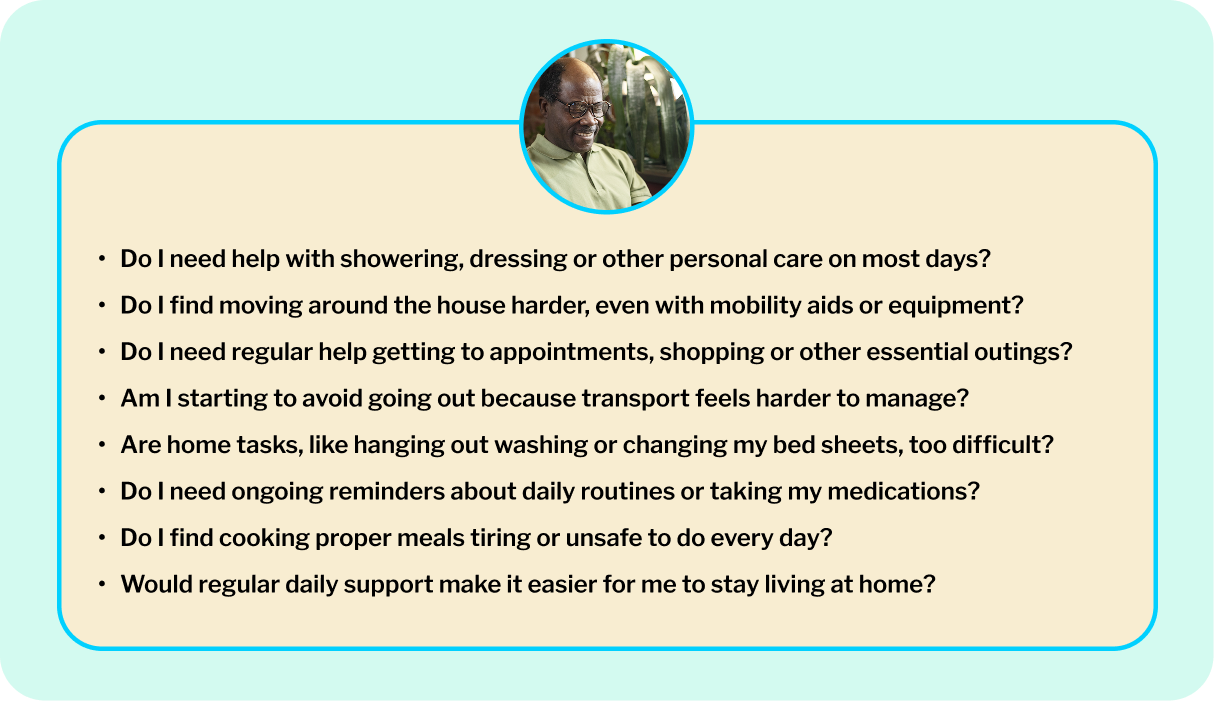
If you answered “Yes” to several of these questions, then Classification 4 may be the right level of support for you.
If you’re not currently receiving funding at this level and think you might need it, you can speak to your care provider at any time, or request a reassessment and care plan review via My Aged Care.
How much funding do I get for Classification 4?
Care recipients with Support at Home Classification 4 funding receive an annual budget of $30,468 divided into $7,617 quarterly payments.
If you’ve moved from a Home Care Package level 4, your funding enters a transitioned HCP level. Under the government’s “no worse off” rule, this means you will receive the same level of funding under SAH as you did with your Home Care Package.
Key funding points:
- Your total care budget consists of government funding, your contributions and any eligible supplements.
- You may be asked to pay a share of costs based on your income and assets. There’s a $137,319 lifetime cap on care costs (current as of 20 March 2026), so you’ll never pay more than this over time.
- Your care provider can deduct up to 10% of your quarterly budget for care management.
- When wait times for ongoing funding in the Support at Home Priority System are longer than expected, you may receive 60% of your approved funding upfront to access essential services. The rest of your budget will be assigned as soon as funding is available.
- Budgets are indexed each year on 1 July.
How many hours of support can I get with Support at Home Classification 4?
With Classification 4 funding ($30,468 annually), the number of care hours you receive isn’t fixed. As a general guide, you could typically receive around eight to eleven hours of support per week.
The exact number of hours depends on numerous factors, including:
- The type of services you choose (for example, clinical support services cost more than personal care or transport)
- Your service provider’s prices (hourly costs)
- Whether you’re required to contribute based on your income and assets
- Provider care management fees
Do I have to pay a contribution with Classification 4?
You may need to pay a contribution with Support at Home Classification 4 funding. The amount depends on two things:
1. Your Income and Assets
- Full Age Pensioner: Minimum contribution
- Part Pensioner / Commonwealth Seniors Health Card holder: Moderate contribution
- Self-Funded Retiree: Higher contribution
As a Support at Home program participant, you will be asked to submit an income and means assessment (typically through Services Australia) to determine how much you contribute toward your care. While this assessment isn’t technically required to access services, if you choose not to complete one, you may be asked to pay the maximum contribution rate.
2. The Service Category
The Australian government groups aged care services into three categories:
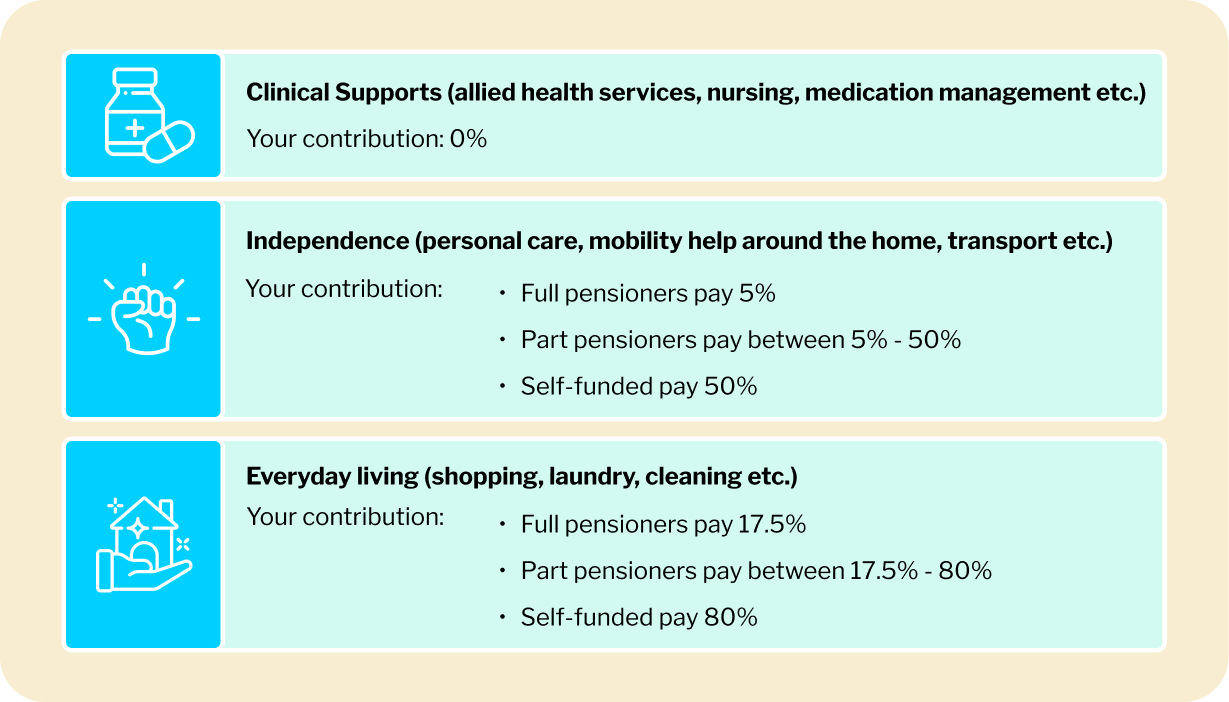
When you put these together, you get an idea of how much you’ll need to contribute. My Aged Care’s Fee Estimator tool can also help you start planning your budget.
What services are included with Support at Home Classification 4?
With a Classification 4 budget, you can organise more regular and wide-ranging support at home. The care services you receive can be shaped around your individual needs and may include:
Scheduled daily help with:
- domestic assistance, like cleaning, laundry or meal preparation
- shopping
- transport
- social support for wellbeing, such as community outings and meaningful activities
Daily help with:
- dressing
- personal hygiene (showering, etc.)
- mobility support around your home
- medication reminders

Regular care such as:
- continence management
- wound care and dressing changes
- medication support and review
- clinical care monitoring (blood pressure, glucose levels, pain, etc.)
- post-hospital recovery care

Light and safety-focused maintenance such as:
- lawn mowing
- weeding garden beds
- pruning small shrubs
- sweeping paths and driveways
- basic watering
- trimming low branches for safety
Additional Help
Need further help understanding Support at Home classification levels or exploring in-home care options? Call us on 1300 854 080 or submit a quick enquiry form and our team will be in touch soon.

SAH FAQs
How do I access Support at Home Classification level 4?
To access Classification 4, you will first register with My Aged Care online or by calling 1800 200 422. If you’re eligible, an assessor will visit your home to review your health, mobility and daily living needs. Based on this assessment, you’ll be assigned a classification level and placed in the Support at Home Priority System for funding. Once your funding becomes available, you can choose a care provider to help plan and deliver your services.
How is your Support at Home level decided?
Your classification level will be set after an aged care assessment. An assessor will visit your home to assess your eligibility. They’ll review your daily life, health and mobility, and will use that information to determine which classification matches your support needs and goals.
How are Support at Home budgets managed?
After your classification is set, your care provider will help you plan home services from a government-approved list. You’ll receive monthly statements to keep you on track, so you know how your funding is being used.
Can funds roll over between quarters?
Yes. Up to $1,000 or 10% of your quarterly budget (whichever is greater) can carry over to the next quarter.
What happens if my care needs change?
If your needs change, you can request a review through your care provider or My Aged Care.
How do I transfer from a Home Care Package to Support at Home Classification 4?
Your Home Care Package funding first moves into a transitioned Support at Home level. Your annual budget stays unchanged, and any unspent funds move with you into Support at Home.
Is Classification 4 the same as a Home Care Package Level 4?
Not exactly. The new SAH Classification 4 is a smaller funding tier as it’s designed for lower-intensity support. The previous Home Care Package Level 4 was designed for higher-intensity needs, so it had a higher budget.
What happens if Classification 4 funding isn’t enough?
If your support needs exceed your budget, you can request a reassessment. This may adjust your classification or provide extra support through short-term care pathways, ensuring you continue receiving safe, practical care at home.

- By via

- By Eddie Carroll

- By Eddie Carroll